
Introduction
Prescription pain medications are commonly used to manage moderate to severe pain after surgery, injury, or chronic medical conditions. Two frequently discussed opioid medications are oxycodone and Percocet.
Although these medications are closely related, they are not exactly the same.
Many patients want to understand:
- What is the difference between oxycodone and Percocet?
- Which medication is stronger?
- Are side effects different?
- Which works better for pain relief?
- Is Percocet the same as oxycodone?
This guide explains the key differences between oxycodone and Percocet, including ingredients, uses, dosage, side effects, risks, and important safety information.
What Is Oxycodone?
Oxycodone is a prescription opioid medication used to treat moderate to severe pain.
It belongs to a class of medications called opioid analgesics.
How Oxycodone Works
Oxycodone affects opioid receptors in the brain and nervous system to reduce pain signals.
Doctors may prescribe oxycodone for:
- Post-surgical pain
- Injury-related pain
- Cancer pain
- Chronic pain conditions
- Severe acute pain
What Is Percocet?
Percocet is a prescription pain medication that contains:
- Oxycodone
- Acetaminophen
Acetaminophen is the same active ingredient found in Tylenol.
The combination is designed to provide enhanced pain relief by combining:
- Opioid pain control
- Non-opioid pain reduction
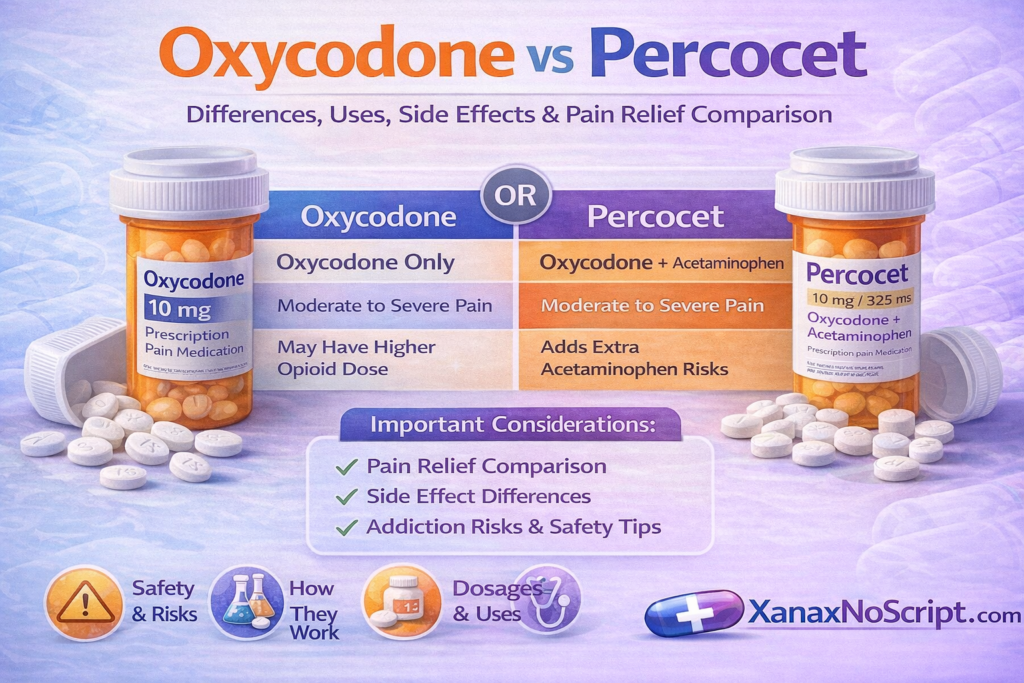
Oxycodone vs Percocet: Main Difference
The biggest difference is the ingredients.
| Medication | Main Ingredients |
|---|---|
| Oxycodone | Oxycodone only |
| Percocet | Oxycodone + acetaminophen |
Because Percocet contains acetaminophen, it may provide additional pain relief benefits for some patients.
However, acetaminophen also introduces additional safety considerations.
Uses of Oxycodone and Percocet
Both medications are prescribed for pain management.
Common Uses
- Surgical recovery
- Dental pain
- Back pain
- Injury-related pain
- Chronic pain
- Severe acute pain
Doctors determine the best medication based on:
- Pain severity
- Medical history
- Liver health
- Medication tolerance
- Risk factors
Which Is Stronger: Oxycodone or Percocet?
Neither medication is automatically “stronger.”
Percocet contains oxycodone plus acetaminophen, which may improve pain relief for certain types of pain.
However:
- Pure oxycodone formulations may contain higher opioid doses
- Percocet includes an additional non-opioid ingredient
Effectiveness depends on:
- Dosage
- Pain type
- Individual response
- Tolerance levels
Oxycodone vs Percocet Side Effects
Both medications may cause opioid-related side effects.
Common Side Effects
- Drowsiness
- Dizziness
- Nausea
- Constipation
- Dry mouth
- Fatigue
- Vomiting
- Confusion
Serious Side Effects
Seek medical attention immediately for:
- Breathing problems
- Severe sedation
- Fainting
- Allergic reactions
- Chest pain
- Blue lips or skin
Percocet and Acetaminophen Risks
One important difference is acetaminophen exposure.
High doses of acetaminophen may increase the risk of:
- Liver damage
- Liver failure
- Overdose complications
Patients should avoid taking additional acetaminophen-containing medications unless approved by a healthcare provider.
Oxycodone vs Percocet Addiction Risk
Both medications carry a risk of:
- Dependence
- Misuse
- Addiction
- Overdose
Opioid medications should only be used:
- Exactly as prescribed
- Under medical supervision
- For approved medical conditions
Never combine opioids with:
- Alcohol
- Benzodiazepines
- Sedatives
- Illegal substances
unless specifically instructed by a healthcare professional.
Immediate Release vs Extended Release Oxycodone
Some oxycodone medications are available in extended-release forms for long-term pain management.
Immediate Release Oxycodone
- Faster pain relief
- Shorter duration
- Often used for acute pain
Extended Release Oxycodone
OxyContin is designed for around-the-clock pain management and lasts significantly longer.
Extended-release opioids are generally reserved for severe or chronic pain cases.
Which Medication Is Better for Pain?
The best medication depends on:
- Pain severity
- Medical history
- Liver function
- Risk of side effects
- Previous opioid exposure
Percocet May Be Preferred For:
- Short-term acute pain
- Dental procedures
- Moderate pain requiring combination therapy
Oxycodone May Be Preferred For:
- Patients avoiding acetaminophen
- Long-term pain management
- Adjustable opioid dosing
Oxycodone vs Percocet Dosage
Dosages vary widely depending on:
- Pain condition
- Opioid tolerance
- Patient age
- Health history
Healthcare providers carefully determine appropriate dosing to reduce overdose risk.
Never change opioid dosages without medical supervision.
Safety Tips for Opioid Medications
Important Safety Guidelines
- Take only as prescribed
- Avoid alcohol
- Do not share medications
- Store securely away from children
- Never crush extended-release tablets
- Discuss all medications with your doctor
Opioids can cause dangerous breathing suppression if misused.
Frequently Asked Questions
Is Percocet the same as oxycodone?
No. Percocet contains oxycodone plus acetaminophen.
Which is stronger?
Strength depends on dosage and formulation rather than the medication name alone.
Is Percocet safer than oxycodone?
Both medications carry opioid risks. Percocet also includes acetaminophen-related liver considerations.
Can oxycodone cause addiction?
Yes. Oxycodone has a risk of dependence, misuse, and addiction.
Are these medications used for chronic pain?
Sometimes. Long-term opioid use is carefully monitored by healthcare providers.
Final Thoughts
Both oxycodone and Percocet are prescription opioid medications used to manage moderate to severe pain.
Oxycodone Features
- Opioid-only medication
- Flexible dosing options
- Available in extended-release forms
Percocet Features
- Combines oxycodone with acetaminophen
- May improve short-term pain relief
- Commonly prescribed after injuries or procedures
Because opioids carry serious risks, they should only be used under professional medical supervision.
Always follow your healthcare provider’s instructions regarding prescription pain medi