
Introduction
Oxycodone is a powerful prescription opioid medication used to treat moderate to severe pain. While oxycodone can be effective for pain management, it also carries serious risks, including dependence, misuse, addiction, and overdose.
Many patients and families ask:
- Can oxycodone cause addiction?
- How addictive is oxycodone?
- What are the warning signs?
- Can prescription opioid use become dangerous?
- What are the risks of long-term opioid use?
This guide explains how oxycodone addiction can develop, important warning signs, side effects, overdose risks, and ways to reduce harm through safe medication practices.
What Is Oxycodone?
Oxycodone is an opioid pain medication that affects receptors in the brain and nervous system to reduce pain signals.
Doctors may prescribe oxycodone for:
- Surgery recovery
- Injury-related pain
- Cancer pain
- Severe chronic pain
- Acute medical pain conditions
Common oxycodone medications include:
- OxyContin
- Percocet
Can Oxycodone Cause Addiction?
Yes. Oxycodone has a significant risk of addiction because it affects the brain’s reward and pleasure systems.
Opioids increase dopamine activity, which may create:
- Euphoria
- Relaxation
- Temporary emotional relief
Repeated opioid exposure can change brain chemistry over time, increasing the risk of:
- Dependence
- Tolerance
- Cravings
- Opioid use disorder
Addiction can occur even when opioids are initially prescribed for legitimate medical reasons.
What Is the Difference Between Dependence and Addiction?
These terms are related but different.
Physical Dependence
Dependence means the body adapts to the medication over time.
If the medication is suddenly stopped, withdrawal symptoms may occur.
Addiction
Addiction involves:
- Loss of control over use
- Compulsive drug-seeking behavior
- Continued use despite harmful consequences
- Intense cravings
Not everyone who takes oxycodone becomes addicted, but the risk is real.
Risk Factors for Oxycodone Addiction
Some individuals may face higher addiction risk.
Common Risk Factors
- Long-term opioid use
- High opioid dosages
- Personal or family history of substance misuse
- Mental health conditions
- Mixing opioids with alcohol or sedatives
- Recreational drug use
- Taking medication differently than prescribed
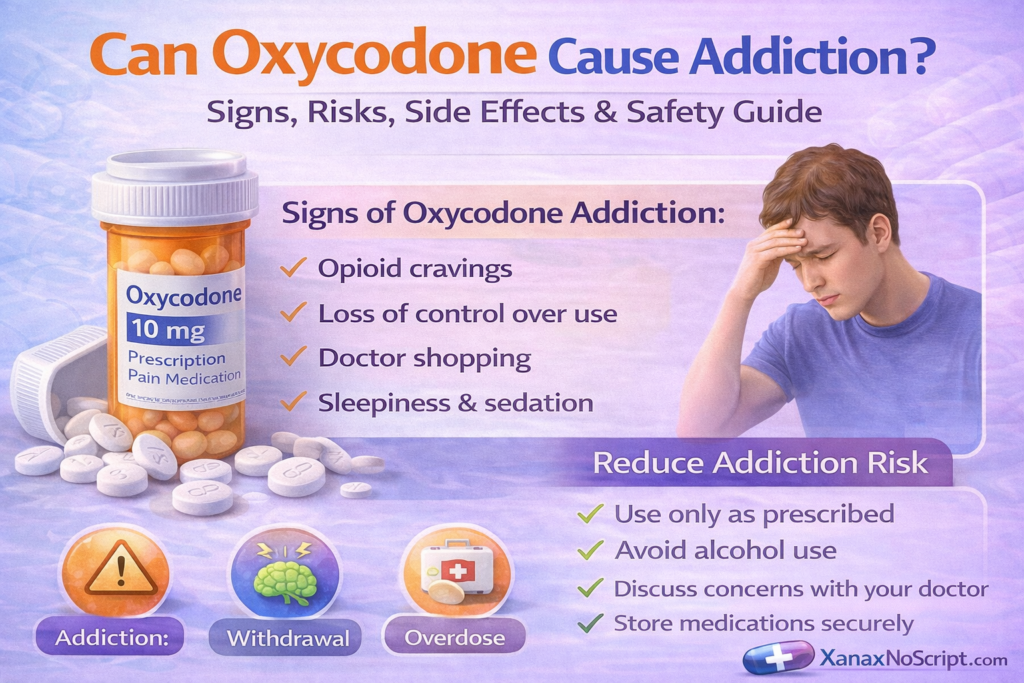
Signs of Oxycodone Addiction
Recognizing warning signs early is important.
Behavioral Signs
- Taking higher doses than prescribed
- Doctor shopping
- Obsessing over medication
- Cravings for opioids
- Using opioids for emotional relief
- Hiding medication use
- Neglecting responsibilities
Physical Signs
- Drowsiness
- Slurred speech
- Pinpoint pupils
- Sedation
- Constipation
- Nausea
- Breathing problems
Oxycodone Side Effects
Even when used correctly, oxycodone may cause side effects.
Common Side Effects
- Dizziness
- Sleepiness
- Dry mouth
- Nausea
- Vomiting
- Constipation
- Fatigue
Serious Side Effects
Seek emergency medical help for:
- Trouble breathing
- Severe sedation
- Blue lips or fingertips
- Unresponsiveness
- Chest pain
- Fainting
Oxycodone Overdose Risks
Opioid overdose can be life-threatening.
Overdose Symptoms
- Slow breathing
- Extreme drowsiness
- Loss of consciousness
- Blue skin or lips
- Weak pulse
- Inability to wake up
Mixing oxycodone with:
- Alcohol
- Benzodiazepines
- Sleeping pills
- Other opioids
greatly increases overdose risk.
Oxycodone Withdrawal Symptoms
Stopping opioids suddenly may trigger withdrawal symptoms.
Common Withdrawal Symptoms
- Anxiety
- Sweating
- Muscle aches
- Chills
- Insomnia
- Nausea
- Vomiting
- Restlessness
Withdrawal can be physically and emotionally difficult.
Patients should consult healthcare providers before stopping opioids.
How to Reduce Addiction Risk
Important Safety Tips
- Take only as prescribed
- Never increase dosage without approval
- Avoid mixing with alcohol
- Store medications securely
- Do not share prescriptions
- Discuss concerns openly with your doctor
Shorter treatment duration may help reduce risk in some cases.
Treatment for Opioid Addiction
Opioid addiction is treatable.
Treatment options may include:
- Medical detoxification
- Counseling
- Behavioral therapy
- Support groups
- Medication-assisted treatment
Common medications used in opioid addiction treatment include:
- Suboxone
- Methadone
- Narcan
Early intervention improves recovery outcomes.
Frequently Asked Questions
Can oxycodone be addictive even with a prescription?
Yes. Addiction can develop even during prescribed medical use.
How long does it take to become dependent on oxycodone?
Dependence may develop after repeated or prolonged opioid use.
Is oxycodone stronger than other pain medications?
Oxycodone is considered a strong opioid pain medication.
What should I do if I think someone is overdosing?
Call emergency services immediately and administer naloxone if available.
Can opioid addiction be treated?
Yes. Many people recover successfully with professional treatment and support.
Final Thoughts
Oxycodone can be an effective medication for severe pain, but it also carries serious risks involving dependence, addiction, and overdose.
Understanding:
- Warning signs
- Side effects
- Safe medication practices
- Overdose risks
can help reduce harm and improve patient safety.
Opioid medications should always be used exactly as prescribed and under medical sup